AGBO Executives Assert Human Direction Remains Central to AI-Assisted Filmmaking
Leaders from the studio behind Extraction and The Gray Man argued at TIFFCOM that algorithms improve efficiency rather than replace artistic judgment.
By Arjun Shah ·
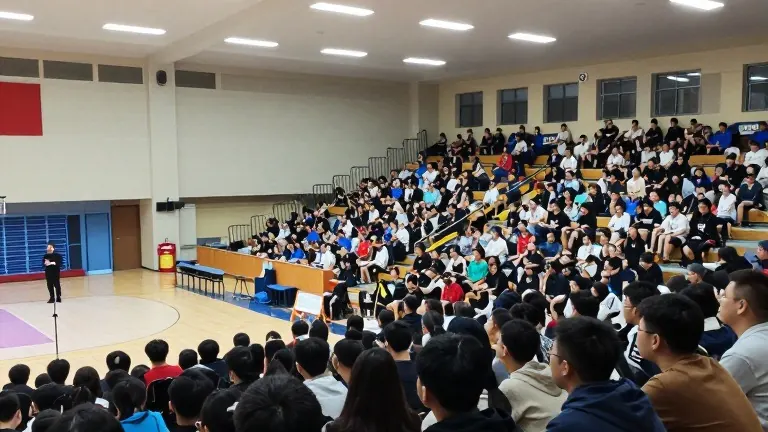
Leaders from entertainment company AGBO told a crowd at TIFFCOM in Tokyo on Thursday that artificial intelligence serves as a tool for filmmakers, not a replacement for their creative judgment. The keynote featured Chris Brearton, a partner and business leader at the firm, and Dominic Hughes, the company’s chief scientific officer. Both executives addressed widespread industry anxiety about machine-driven production.
AGBO, based in Los Angeles, has produced films including Extraction, Everything Everywhere All at Once, The Gray Man, and The Electric State. Brearton noted that the company’s founders, Anthony and Joe Russo, have long championed technology as an aid to storytelling. He pointed to their early work on the comedy Arrested Development, where digital cameras and editing allowed them to realize a script that would have been too expensive to shoot otherwise.
Hughes, who holds an academic background in algorithms and machine learning, emphasized that technology should support creators rather than dictate the final product. He cited Pixar as an example, arguing that while 3D rendering evolved to tell stories, the technology itself was not enough. At AGBO, his team focuses on ensuring humans remain in charge of curating algorithmic outputs to keep artists in the driver’s seat.
Brearton countered the notion that AI will immediately replace human workers, citing significant misinformation about the technology's current scope. He stated that the human element remains essential to performance. In the medium term, he argued, AI will primarily improve process efficiencies, allowing creators to focus on their craft instead of tedious technical tasks.
Hughes drew a distinction between AI’s ability to critique existing work and its struggle to create novel content from scratch. He explained that AI can determine if a discovered play might be by Shakespeare, but if asked to write an original play, the result would feel like it was written by a twelve-year-old. Brearton added that AI can provide data to help writers struggling with character development in specific acts, offering insights rather than definitive solutions.
The executives also discussed the potential for AI to democratize storytelling. Brearton suggested new filmmakers could produce movies on smaller budgets by using AI to achieve their visions. Hughes warned, however, that AI can generate vast amounts of mediocre content. He argued the solution lies in raising the bar for quality, a shift he finds exciting for the future of high-quality entertainment.
Hughes stressed the importance of tracking tool usage and maintaining a clear paper trail for copyright and compensation, a practice AGBO applies comprehensively. Brearton concluded by describing the future of entertainment as concurrent, where audiences consume multiple media sources simultaneously. Creators must build rich worlds that deliver quality stories across all these platforms at once. The keynote was moderated by Naman Ramachandran, the Asia Editor for Variety.
Source: Variety
More Business · National news · Consumer Alerts · Report a business · Got a Story?