Lula Wins Fourth Term in Brazil
The incumbent secured 51.79 percent of the vote, reversing a first-round deficit to defeat Flávio Bolsonaro by 4.3 million ballots.
By Stefan Kim ·
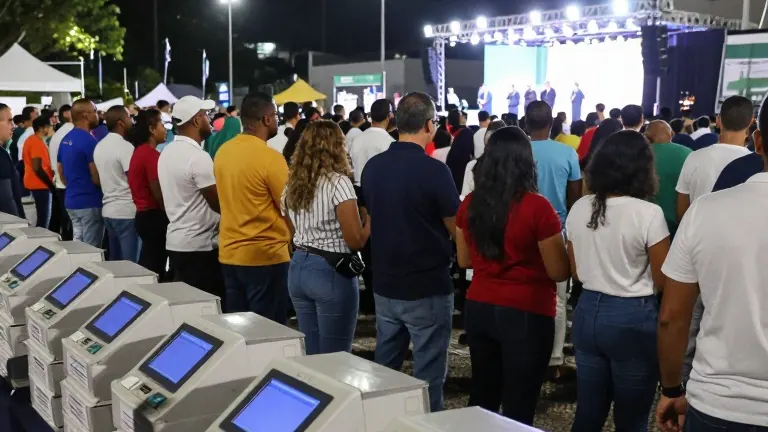
Luiz Inácio Lula da Silva secured a fourth nonconsecutive presidency on Sunday, capturing 51.79 percent of the vote in a runoff that remained competitive until the final counts were tallied. Results were declared shortly after midnight UK time on October 26, 2026.
The Workers' Party incumbent defeated far-right senator Flávio Bolsonaro by a margin of approximately 4.3 million votes out of 159 million total ballots cast. Lula characterized the outcome as a defeat for denialism, ending a campaign that had seen the former first-round runner-up overtake the lead in polling weeks before the second ballot.
The victory reverses the tally from the first round earlier this month, when Bolsonaro received 56.1 million votes to Lula’s 53.8 million. Since democracy was restored in 1985, no candidate who finished second in the initial vote has ever won the subsequent runoff. Polls narrowed sharply in the interim, leaving Bolsonaro ahead by only fractions of a percentage point in the final days.
Several factors contributed to Lula’s turnaround. A record 21 percent abstention rate in the first round disproportionately affected lower-income voters, prompting a coordinated mobilization effort. Millions joined a WhatsApp group dubbed Lula's army to share supportive content, while Lula, who recently adopted a smartphone, increased his presence on Instagram and TikTok. His digital reach surpassed Bolsonaro’s for the first time, a shift that may have influenced the final outcome.
The Bolsonaro campaign faced scrutiny over social media algorithms and scandals, including reports that Flávio Bolsonaro attended a 2020 boat party with vaccine lobbyists. A dozen watchdog groups alleged Meta favored the Bolsonaro campaign, though the company dismissed the claims as false. The electoral court ordered the platform to avoid unequal treatment of candidates during the campaign.
International dynamics also shaped the race. President Donald Trump described Jair Bolsonaro’s ongoing trial as a witch hunt and imposed 50 percent tariffs on Brazilian goods. Lula positioned himself against what he called colonial designs, pursuing a multilateral foreign policy that balances relations with the United States, China, and Russia. He also declined invitations to join a Latin American military coalition targeting drug cartels.
The result has environmental implications, as deforestation in the Amazon has fallen by more than 70 percent under Lula’s previous terms. However, he must now collaborate with a newly elected congress containing a record number of right-wing politicians who are often hostile to environmental and Indigenous rights. Flávio Bolsonaro has refused to concede, citing the two-hour extension of voting hours, a move both campaigns had requested for different reasons.
Source: The Guardian