Montauk anglers face empty waters as striped bass population crashes
Guides and recreational fishers report a sharp drop in small fish, threatening a multi-billion dollar industry and a generations-old coastal tradition.
By Stefan Kim ·
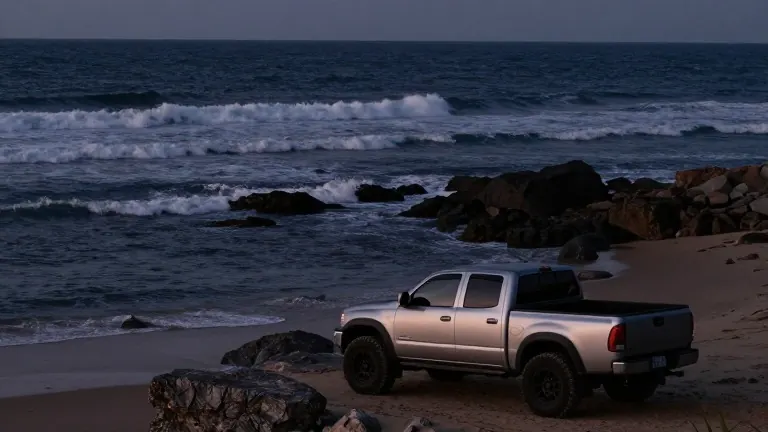
Bill Wetzel drives a modified 4x4 pickup truck over boulders and thick sand along the Montauk, New York, shoreline every October night. He scans the Atlantic surface for seams in the current, cuts in sandbars, or birds working over bait. He logs these details meticulously, but lately, the data points to a troubling absence: the fish are not showing up. Wetzel has led fishermen to these waters for more than 25 years. He knows the tides and the moon phases. What he cannot predict is whether any striped bass remain to catch.
The decline of the striped bass population has put an estimated $8 billion industry at risk. Scientists attribute the drop to a combination of human-caused, environmental, and ecological changes. For decades, East Coast anglers made more than 17 million trips to target this species. Today, that future is in danger as the population fails to replenish itself.
Wetzel notes that the chaotic feeding frenzies, known as blitzes, which were once a hallmark of Montauk's shores, have disappeared. He has not seen one in four years. "There's no small fish left. They're gone," he said. The fish that remain are predominantly large adults, indicating a lack of younger fish to sustain the population.
Jason Markowitz, an IT professional and former president of the Montauk Surfcasters Association, still swims out to offshore rocks to fish. These grounds are proven but dangerous, with strong waves and predators swimming nearby. Markowitz said the swim is only worth it if the fish are present. "You’ve got a lot of folks that are finding fish but it really is a case of ‘last of the buffalo,’” he said.
John Skinner, 65, has fished Long Island for striped bass since he was a boy. He is an author and runs a YouTube channel on the sport. Skinner describes the current state of the industry with two words: "It sucks." He often visits prime spots on the North Fork and returns empty-handed. He observes a lack of small forage fish, such as menhaden, which striped bass rely on for food. He also notes a decline in other large predatory species.
John Mahan has fished in Montauk since 1987. This is the first year in four decades that he has not caught a striped bass. He remembers the late 1980s and 1990s as spectacular times. Mahan believes the solution may be to stop fishing the species entirely for a period. "What it was like, back in the later ‘80s and ‘90s, was spectacular," he said.
Montauk, located at the eastern tip of Long Island, is historically renowned for its striper fishing. The area features sand beaches, boulder-strewn points, and swift currents. The community has undergone a transformation over the last few decades. Once a blue-collar fishing town, it has become increasingly similar to the wealthy enclaves of the Hamptons. This change accelerated in the 2000s. Wetzel notes that the old motto of a small drinking village with a big fishing problem no longer applies.
The next step for these anglers is to wait for scientific data and regulatory decisions. The striped bass stock is currently under review by management boards. Fishermen in the area continue to monitor their local waters, hoping for a return of the small fish that would signal a recovering population. For now, the ocean remains quiet, and the rocks are often empty of the large silver fish that once attracted visitors from across the country.
Source: KPRC-TV