Tesla Builds Its Own Maps After 30 Years of Vision-Only Rhetoric
Tesla is developing in-house mapping technology to address persistent errors in its Full Self-Driving system, marking a significant departure from its previous stance that detailed maps were unnecessary.
By Sofia Wisniewski ·
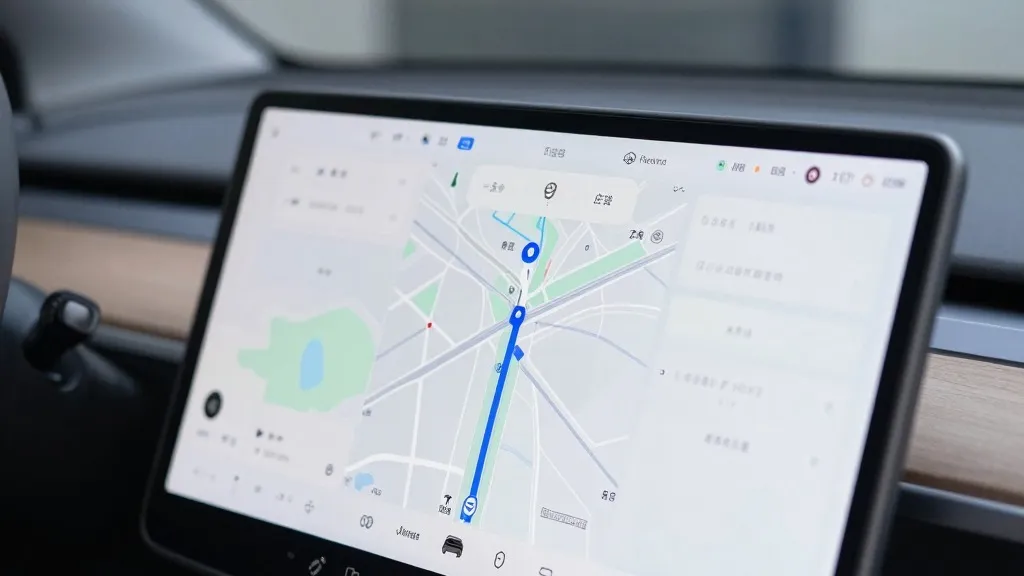
Tesla is currently developing its own mapping infrastructure to resolve frequent errors in its Full Self-Driving software. The company aims to use this new system to better handle speed limits, parking, and route selection. This announcement was made by Ashok Elluswamy, Tesla's Vice President of AI, during the firm's Q3 2026 earnings call. The initiative represents a major strategic pivot for the automaker.
The decision follows years of public debate about the best approach to autonomous driving. Tesla's leadership previously argued that relying on maps made self-driving systems fragile. Instead, the company championed a vision-only approach using cameras and artificial intelligence. Now, Tesla is adopting a method similar to that used by competitors like Waymo, where fleet data helps create detailed road maps.
The push for in-house maps began with specific feedback from investors. During a shareholder question-and-answer session, a retail investor noted that mapping issues remained a common complaint. They cited speed limits, parking, and typical routes as the primary problems. Elluswamy agreed that Tesla should not depend on external providers for this critical data. He explained that the new architecture will be powered by AI and learn from the collective experience of the entire fleet.
The new system will also adapt to individual driver preferences and respond to voice commands. Tesla plans to integrate this technology in phases. The initial rollout will occur with FSD version 15, focusing on the start and end of trips. Over the following months, the system will take over navigation, parking, and destination handling. This gradual implementation allows the company to refine the technology as it expands its capabilities.
This change marks a notable reversal for Tesla, which has had a complex history with mapping technology. In 2015, the company announced it was building high-precision maps using data from its customer vehicles. However, at its Autonomy Day in 2019, Elon Musk declared that high-precision lane maps were a mistake. He described them as making the system extremely brittle and called lidar a fool's errand. At the time, Tesla positioned its camera-based approach as a superior alternative to the map-heavy strategies of its rivals.
Critics argue that the issues Tesla is now addressing prove the limitations of pure vision. Recent reports highlight significant problems with speed limit compliance. In Belgium, a road safety group found that FSD vehicles exceeded the limit in 55% of 30 km/h zones in Brussels. In the United States, the NHTSA is considering an investigation into claims that Tesla robotaxis speed through school zones. These incidents suggest that the current vision system struggles with basic road information.
The new mapping strategy aligns Tesla's operations more closely with those of Waymo. Both companies now rely on their fleets to collect data and update maps. Waymo uses lidar-equipped vehicles to create high-definition maps before launching services in new cities. Tesla is now using its existing fleet to build a similar layer of information. While Tesla is not yet using centimeter-level high-definition maps, the trend suggests it may move in that direction. This approach supports the current robotaxi service, which operates within specific geofenced areas.
The development of these maps does not negate the value of Tesla's vision system, but it does acknowledge that a complete solution requires understanding the environment through multiple data sources. As the company continues to push for unsupervised FSD in consumer vehicles, the integration of a robust, in-house mapping system will be critical. The success of this project will determine whether Tesla can overcome the reliability challenges that have plagued its self-driving efforts for the past decade.
Source: Electrek · original report published