Covert footage reveals Iranian tankers slipping past US naval blockade
A months long probe found nine small vessels smuggled liquefied petroleum gas to China by using an offshore anchorage off Malaysia.
By Arjun Shah ·
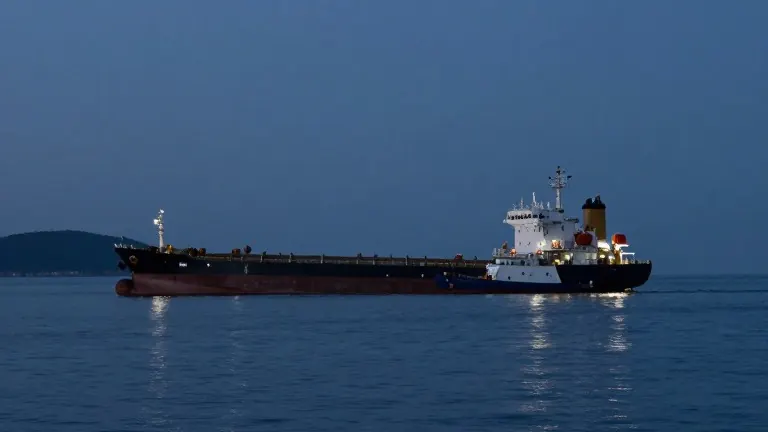
United Against Nuclear Iran (UANI) released covert video of a small tanker bypassing a US naval blockade to deliver sanctioned fuel to China. The group, which spent months tracking maritime traffic, identified the vessel as the SOGL. Investigators filmed the ship receiving supplies at an offshore location near Malaysia before it continued to its destination in China.
The SOGL is a Handymax class tanker with an IMO number of 9208227. It departed the Iranian port of Assaluyeh in late August carrying approximately 500,000 barrels of liquefied petroleum gas. The vessel breached the US blockade on September 1. It then traveled thousands of miles to the Eastern Outer Port Limits Anchorage, a maritime zone about 70 kilometers off the Malaysian coast.
UANI analysts say at least nine similar small tankers have successfully evaded US restrictions in the Strait of Hormuz since the blockade resumed in July. These ships typically carry Iranian oil or LPG. The organization noted that the US blockade has largely prevented large crude oil tankers from leaving the Gulf of Oman. No Iranian crude oil has successfully departed the region since mid-July, according to the group.
The Eastern Outer Port Limits Anchorage serves as a staging ground for these smaller vessels. Ships wait in this area to receive fuel, food, and other logistics services. Some vessels also conduct ship-to-ship transfers here. Jemima Shelley, a senior analyst at UANI, explained that the anchorage allows Iranian energy exports to continue while US naval forces patrol waters closer to Iran. She described the site as a key node in Iran's trade network with Chinese buyers.
The SOGL remained in the Malaysian anchorage until September 16. On that date, UANI chartered a supply vessel to enter the area 100 nautical miles from the coast. The team observed the SOGL sitting low in the water while a smaller tanker provided bunkering services. Shelley said the video shows the vessel receiving illicit services that are common in that specific anchorage. Authorities in the region appear to overlook these activities, the analyst noted.
After leaving Malaysia, the SOGL traveled northbound into the South China Sea. It did not transfer its cargo to another ship. Instead, it discharged the Iranian LPG at Xinzhou Port in China. The vessel had previously been added to the US Treasury Department’s Office of Foreign Assets Control sanctions list on October 8. The US cited its involvement in transporting Iranian petroleum products since 2025. Records link the ship to Gravion Maritime Co. and show it has flown flags for Comoros and Zimbabwe.
Small tankers use specific tactics to avoid detection. Operators often turn off their Automatic Identification System transponders, which broadcast a ship's identity and location. They may also fly false flags to make the vessel appear stateless. These ships frequently load cargo in Iran, transit the Persian Gulf, and then perform high-risk transfers in the Gulf of Oman. The receiving tanker then attempts to breach the blockade line.
Liquefied petroleum gas is a flammable mixture of hydrocarbons used for heating, cooking, and industry. Shelley noted that the US Navy usually attempts to turn around blocked vessels rather than use military force. Using force is riskier with volatile cargo like LPG. The US blockade targets large tankers carrying up to two million barrels of crude oil first. Smaller vessels exploit the lower risk associated with intercepting their less volatile cargo.
China is the primary destination for Iranian liquid cargo exports. For years, China has accounted for 80 percent of these exports. That share has grown since the start of the Iran War, with China now importing nearly all of Iran's oil and LPG exports. This trade allows Iran to maintain revenue while providing China with discounted energy products. The US has largely succeeded in stopping large crude exports, but small LPG tankers continue to move cargo through the system.
Source: Fox News