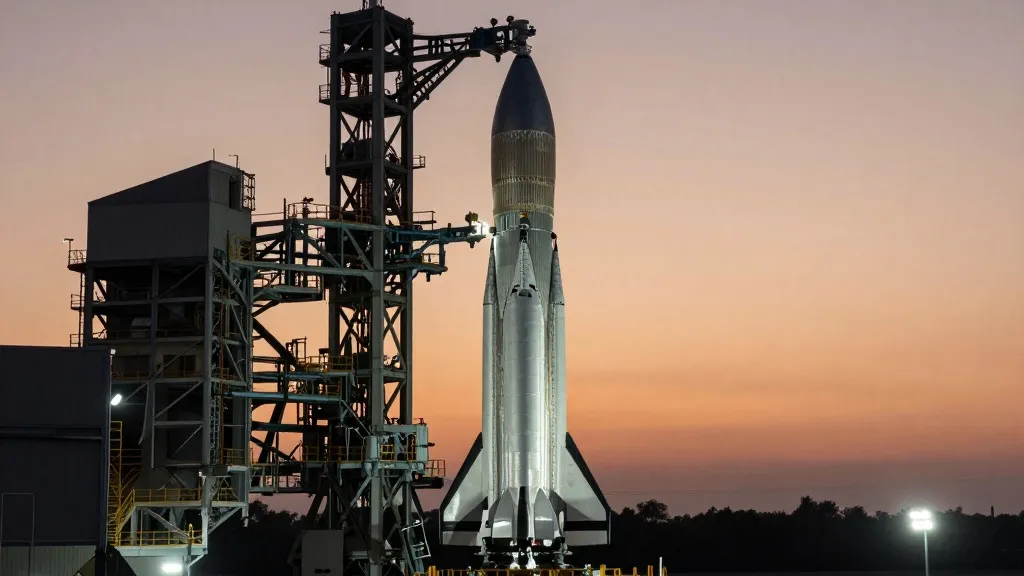
Lunar Landing Architecture: NASA Overhauls Artemis Landings, Clears Orion Hurdle
Agency outlines a revised flight plan for returning astronauts to the lunar surface by 2028, detailing new docking procedures for commercial landers.
By Sofia Wisniewski ·

NASA is pushing to put boots back on the lunar surface by 2028 with a significantly altered flight plan. During a briefing held today, agency officials provided the first full public explanation of how it intends to execute the next phase of the Artemis Program, revealing major changes to how the mission will be assembled and flown.
The presentation outlined specific modifications to the mission architectures for both commercial partners involved in the effort. For SpaceX, the revised plan calls for the Orion spacecraft to dock with the Starship lunar lander while in high-Earth orbit before the crew begins the transit to the Moon. On the Blue Origin side, the mission profile involves four launches of the New Glenn rocket and does not require any spacecraft-to-spacecraft refueling. The agency also noted that the Blue Moon lander could potentially rendezvous with Orion in low-Lunar orbit.
The timeline for these operations remains aggressive but unchanged. NASA continues to anticipate launching the Artemis III mission, which will serve as a demonstration involving docking with both the Blue Moon and Starship vehicles near Earth, by summer 2027. Officials are still tracking toward a 2028 launch for Artemis IV, which would involve an actual landing on the lunar surface.
NASA Administrator Jared Isaacman expressed confidence in the agency's ability to meet these deadlines. "This is an achievable path we are on right now," Isaacman said. "We have the mandate, we have the resources, and the support from our stakeholders to be able to execute, and that's what we intend to do."
Background on these architectural changes reveals that the decision to remove the Gateway element from the program earlier this year inadvertently helped solve a long-standing technical challenge for SpaceX. Engineers for the company had previously requested that NASA remove the requirement to dock with Orion in a near-rectilinear halo orbit around the Moon, as that procedure required additional energy and presented other difficulties. By canceling the Lunar Gateway earlier this year, NASA eliminated the obstacle for SpaceX.
Reactions to the briefing suggest that while the agency's leadership has taken a hard look at every element of the Artemis Program to seek changes that can help lander companies execute and accelerate their plans, the central question remains whether they can hold to those dates.
What happens next depends on the ability of both SpaceX and Blue Origin to build their respective vehicles. The agency's plans for high-Earth orbit rendezvous and multi-launch fueling strategies now depend on the successful execution of these commercial contracts. With the demonstration mission targeted for next summer, the window for preparing the hardware required for Artemis III is narrowing as the agency moves toward its goal of a lunar landing in 2028.
The agency's decision to alter the docking procedures for both Starship and Blue Moon represents a significant shift in how the mission will be conducted, but officials maintain that the path to the lunar surface is clear. The agency is moving forward with its plan to return astronauts to the lunar surface as soon as 2028 as part of its Artemis Program.
Source: Ars Technica · original report published