Israel Vote: Netanyahu Seeks Mandate Amid Tensions with Washington
Election analysts suggest the outcome may have less impact on Iran policy than expected, as US President Trump plays a decisive role in regional escalation.
By Sofia Wisniewski ·

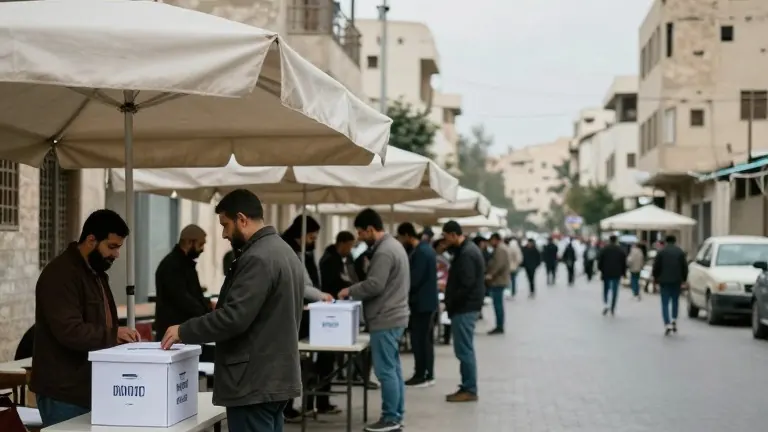
Benjamin Netanyahu faces voters in Israel on Tuesday in the first general election since the Hamas attack of October 7, 2023. The incumbent prime minister seeks to retain power while navigating a regional security crisis that has escalated into a war with Iran. His primary challenger is Gadi Eisenkot, former chief of staff of the Israel Defense Forces and leader of the centrist party Yashar.
The race has become a tight contest between the two men. US President Donald Trump has backed Netanyahu, calling him a "warrior prime minister" in an online post. Trump warned that if Israel chooses a different leader, America might have to handle the conflict with Iran alone, a task he described as one he is not inclined to undertake.
Reports of friction have emerged between the two administrations. The Financial Times indicated that the Israeli military planned new strikes on Iranian nuclear facilities and energy infrastructure around October 10. Trump opposed this escalation ahead of the US midterm elections scheduled for November 3. The Jerusalem Post later challenged this account, stating the army had no specific directive for such an operation.
Experts suggest the election result may not drastically alter Israel's approach to Tehran. Raz Zimmt, head of the Iran program at the Tel Aviv-based Institute for National Security Studies, noted that political factions in Israel view the Iranian nuclear threat with only minor differences. Zimmt told Deutsche Welle that military escalation depends more on the US president's decision than on the identity of the Israeli prime minister.
Danny Citrinovitch, a senior fellow at the same institute, agreed that fundamental changes are unlikely. He stated that even if Netanyahu leaves power, the policies and influence he established over recent years will not disappear. Citrinovitch added that returning to the previous nuclear deal has no current place in the Israeli political arena.
The shift in Israel's stance toward Iran traces back to the October 7 attack. Before that day, Navid Toobian of the Middle East Media Research Institute observed that many believed Israel should manage the conflict in a limited way. The attack changed this consensus, demonstrating that Tehran would use significant effort to strike Israel.
Damon Golriz of the Hague Institute for Geopolitics identifies three goals in the current US and Israeli policy toward Iran. These include removing regime leaders, causing industrial collapse, and orchestrating civil war to dismember the country with the help of Kurdish and Baluch separatists. Golriz also pointed to a diplomatic opportunity in Islamabad six months ago, where Iran agreed not to initiate war against Israel, a window he believes was quickly closed.
Tehran has prepared for retaliation. Senior Iranian security officials told Reuters that their plans include destroying undersea fiber-optic cables in the Persian Gulf and the Strait of Hormuz. They also aim to target US-dependent data centers and AI infrastructure in the region.
Source: Deutsche Welle