Saline Township Sees Data Center Tax Revenue Jump to $10 Million
A single facility promises to boost local collections from hundreds of thousands to eight figures, while a statewide panel argues the approval process moved too fast.
By Stefan Kim ·
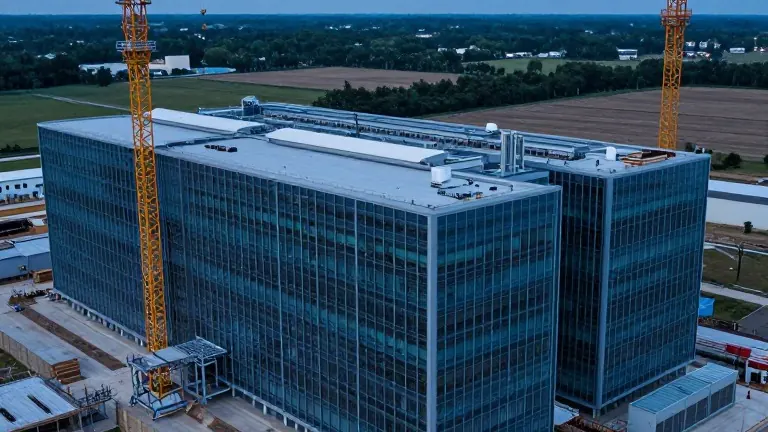
A planned data center in Saline Township will raise annual local property tax revenue from a few hundred thousand dollars to more than $10 million, according to senior strategist Jeff Guilfoyle. The facility, a joint project by Oracle and OpenAI known as Stargate, is projected to create 450 permanent on-site jobs and thousands of temporary construction positions. This financial projection was presented at a public forum in Detroit where experts debated the economic and environmental impact of the industry's rapid expansion in Michigan.
The discussion took place at the inaugural Bridge Michigan Issues Summit at Marygrove Conservancy. More than 375 people attended the event, either in person or virtually, including a watch party at Alpena Community College. The summit capped a yearlong journalism project called Bridge Listens, which surveyed over 6,400 readers to identify top state concerns. Data centers, along with other environmental topics, ranked high on that list. The event featured a panel of four experts who analyzed the tension between state economic goals and the resource demands of new computing facilities.
Panelists agreed that public opposition has begun to alter state policy just two years after lawmakers enacted tax incentives to attract developers. Michelle Martinez, director of the University of Michigan Tishman Center for Social Justice and the Environment, said the legislative decision to exempt qualifying data centers from sales and use taxes opened the floodgates. She noted that the process left many residents feeling blindsided by the scope and speed of development, citing a lack of channels for public input in the decision-making process.
Ypsilanti Township supervisor Brenda Stumbo echoed those sentiments, arguing that lawmakers rushed the process without consulting voters or local officials. Stumbo said the state welcomed the industry without adequate preparation for local negotiations. She described the approval timeline as rushed, noting that in personal and professional life, rushing projects rarely leads to good outcomes. Stumbo’s comments reflected a growing sentiment among local leaders who are now tasked with managing the details of these multi-billion dollar investments.
The panel offered mixed views on the industry’s long-term value. Guilfoyle highlighted the substantial tax revenue and job creation in Saline Township as key drivers for community benefit. However, other speakers raised concerns about environmental consequences and quality of life. The group acknowledged that while Michigan stands to gain from the investments, the state faces challenges in managing the associated energy and water usage.
Erik E. Nordman, director of Michigan State University’s Institute of Public Utilities, addressed the strain on the state’s power grid. A single 1-gigawatt facility requires as much power as a large US city. Nordman described the ability of utilities to absorb this demand without raising residential rates as the million-dollar question. He noted that while some areas have seen lower rates due to shared infrastructure costs, others have experienced rate hikes when demand outstripped grid capacity.
Michigan law prohibits utilities from forcing other customers to cover the investment costs for data centers, providing some insulation against rate shock. However, Nordman expressed doubt about the state’s ability to meet its 2040 clean energy mandate while accommodating this new load. He stated that the challenge is very difficult because previous legislation assumed relatively flat demand growth. Martinez added that even if Michigan succeeds, data center demand in other states, such as Texas with its 424 GW backlog, will likely drive new fossil fuel investments that affect the air quality across state lines.
Source: Bridge Michigan
More Business · Consumer Alerts · Report a business · Got a Story?