Economist says K-shaped economy drives midterm voter mood despite strong data
Alessandro Rebucci notes that while aggregate economic data looks strong, the distribution of wealth has voters feeling disconnected from those numbers.
By Sofia Wisniewski ·
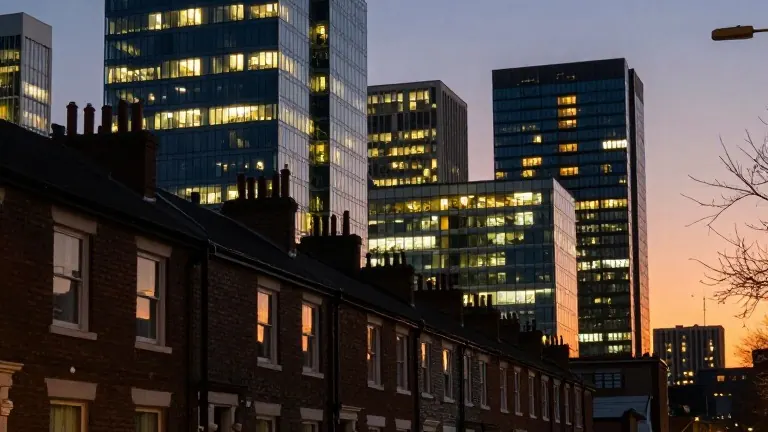
Economic data shows a strong national economy, but many voters feel the opposite. This disconnect is influencing how people vote in the upcoming midterm elections.
Alessandro Rebucci, an economics professor at Johns Hopkins Carey Business School, explains the gap. He says voters judge the economy based on their personal cost of living rather than official statistics. "In the data, you have an economy that is very strong as a whole. How that pie is distributed affects how a large segment of the population and the voters are feeling about the economy right now," he said.
Economists call this the K-shaped economy. The term describes a split in financial fortunes. High-income earners and asset owners are thriving. Middle- and lower-income earners are falling behind. Rebucci notes that wealthy households spend more than lower-income groups. This happens both in absolute terms and as a share of their total income and wealth.
President Donald Trump has claimed the U.S. economy is performing well during campaign stops. At an August 5 rally in Las Vegas, he stated, "The economy is the greatest economy we’ve ever had, by far." This claim often contradicts recent consumer surveys. Those surveys show voters have negative views about their financial situations.
Political analysts note that the ruling party usually touts economic strength during each election cycle. The current trend fits that historical pattern. Despite the tension between data and perception, Rebucci argues that American society has long accepted economic inequality. He does not believe the goal is to eliminate that gap completely.
Instead, Rebucci suggests the system needs adjustment. He wants people to believe they have a chance to move into the top 10% or top 1% of earners. "The issue is not about eliminating the inequality, but to adjust the system in such a way that we can live better with that inequality," he said. Voters will soon decide if they agree with that assessment at the polls.
Source: WCJB